
$160.00 Original price was: $160.00.$145.00Current price is: $145.00.
⚠️ Important Notice:
By purchasing, you confirm that you are a qualified individual using this product in accordance with all applicable laws and research regulations.
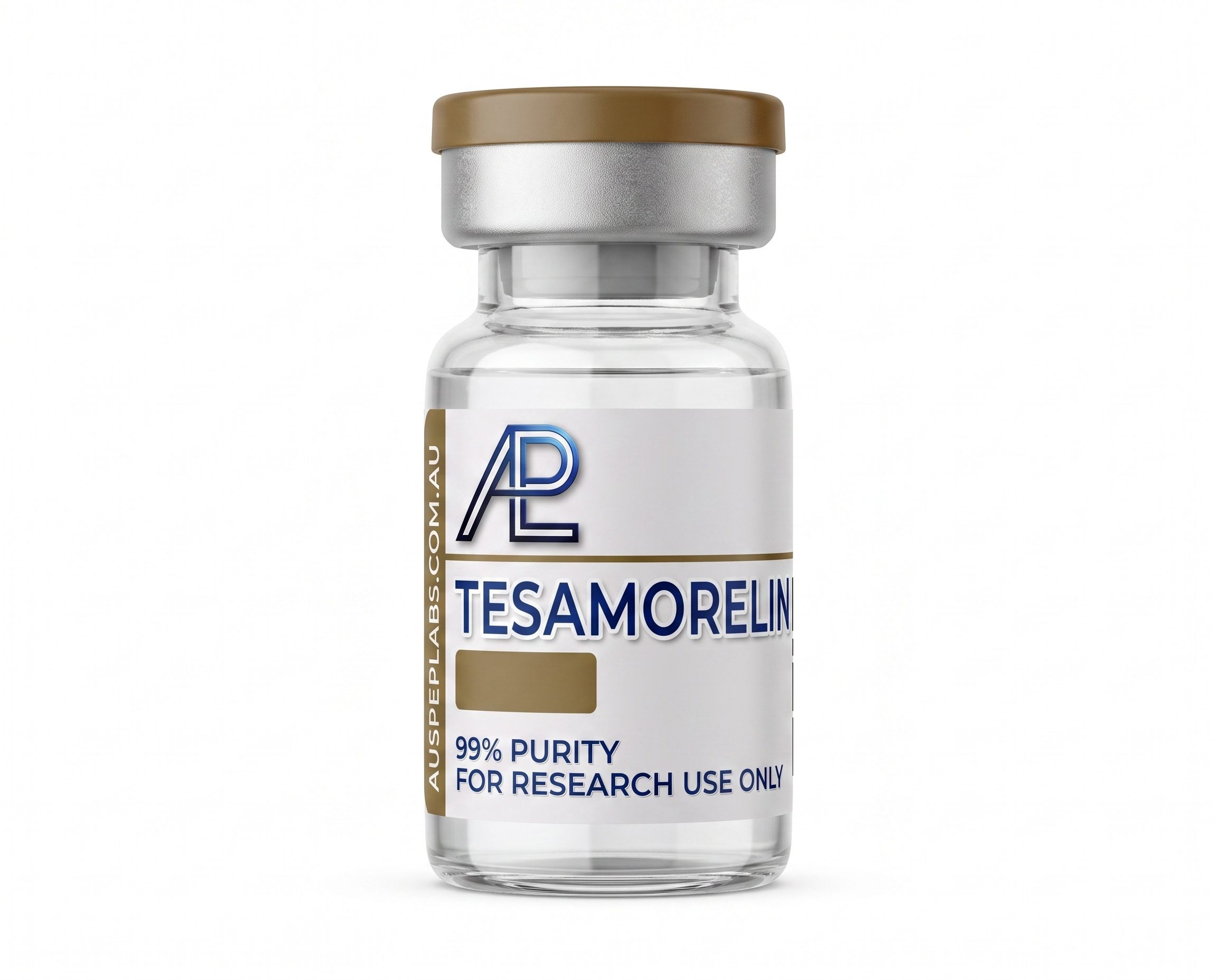
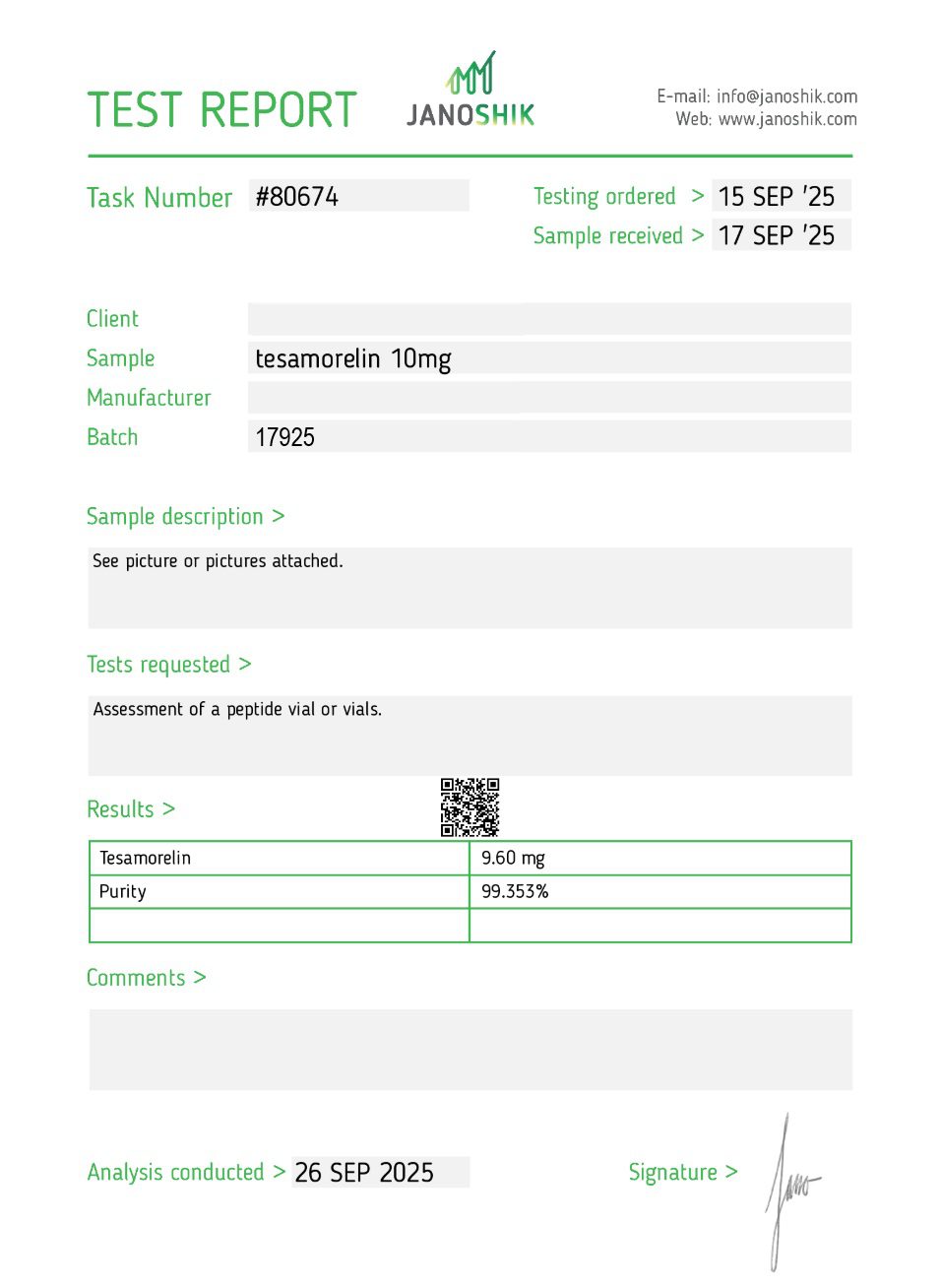
Tesamorelin (TH9507, CAS 218949-48-5) is a synthetic 44 amino acid analog of human Growth Hormone-Releasing Hormone (GHRH 1-44) with a trans-3-hexenoic acid modification at the N-terminus, developed by Theratechnologies Inc. in Montreal, Canada, supplied by AusPepLabs in lyophilized format for laboratory and analytical research applications. The trans-3-hexenoyl N-terminal modification was engineered to enhance resistance to DPP-IV enzymatic degradation compared to native GHRH while maintaining full GHRH receptor agonist activity, making it one of the most stable synthetic GHRH analogs available for laboratory research. Each vial is independently verified to ≥99% HPLC purity with a Certificate of Analysis available on request. For scientific research use only.
Why Research Laboratories Select Tesamorelin
Tesamorelin is one of the most studied GHRH analog peptides in current endocrine research literature — distinguished from shorter GHRH analogs like Sermorelin (29 AA) and CJC-1295 (29 AA) by its full 44 amino acid GHRH sequence combined with a unique N-terminal lipophilic modification that dramatically enhances DPP-IV resistance. This combination of full-length GHRH sequence and enhanced enzymatic stability makes it a valuable reference compound for laboratories studying GHRH receptor binding kinetics, pituitary somatotroph signaling, endocrine feedback loop dynamics, and comparative GHRH analog pharmacology.
| Dosage | 10mg, 20mg |
|---|
Unlock 25% OFF
Your First Order!
Reviews
There are no reviews yet.