
$110.00 Original price was: $110.00.$90.00Current price is: $90.00.
⚠️ Important Notice:
By purchasing, you confirm that you are a qualified individual using this product in accordance with all applicable laws and research regulations.
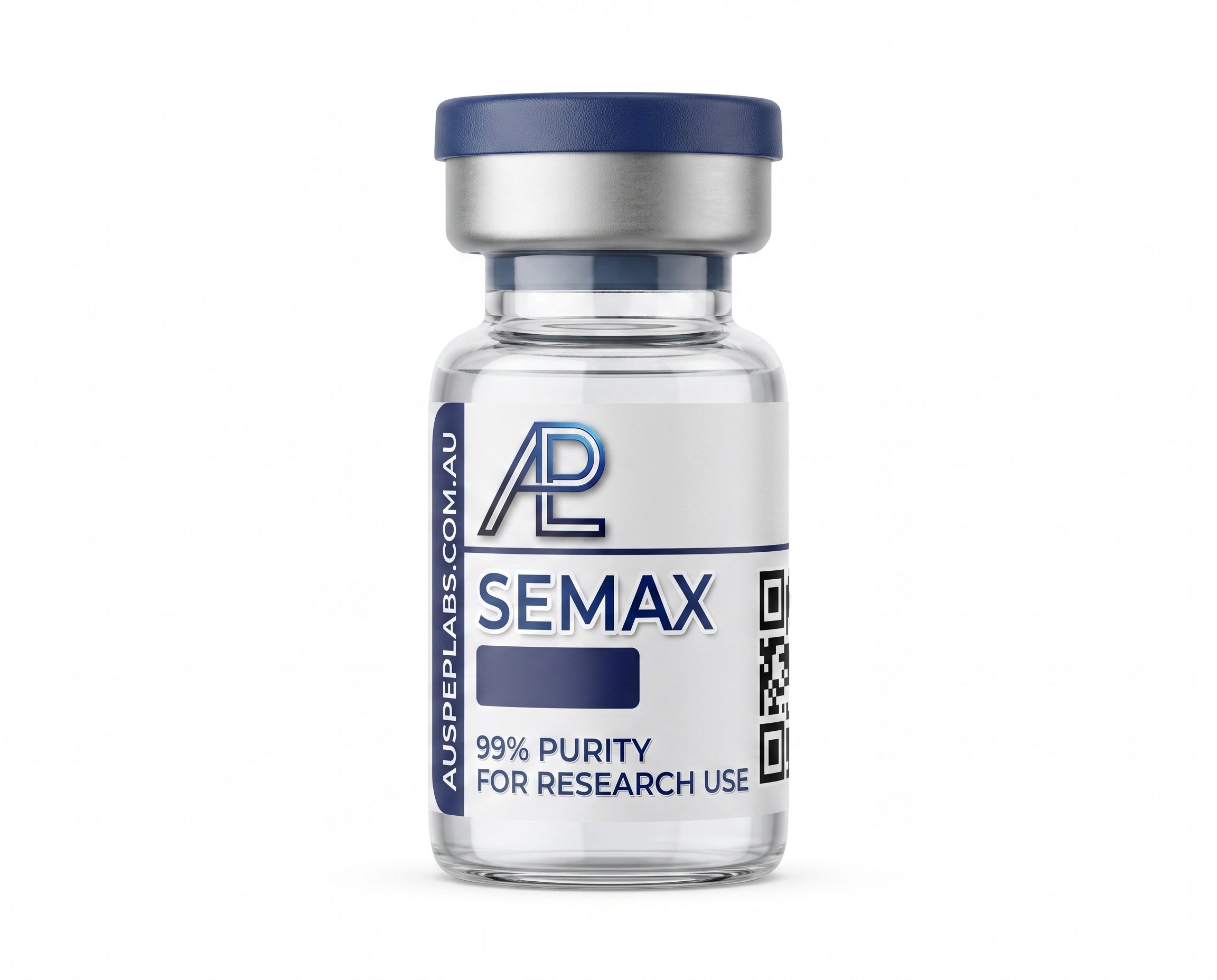
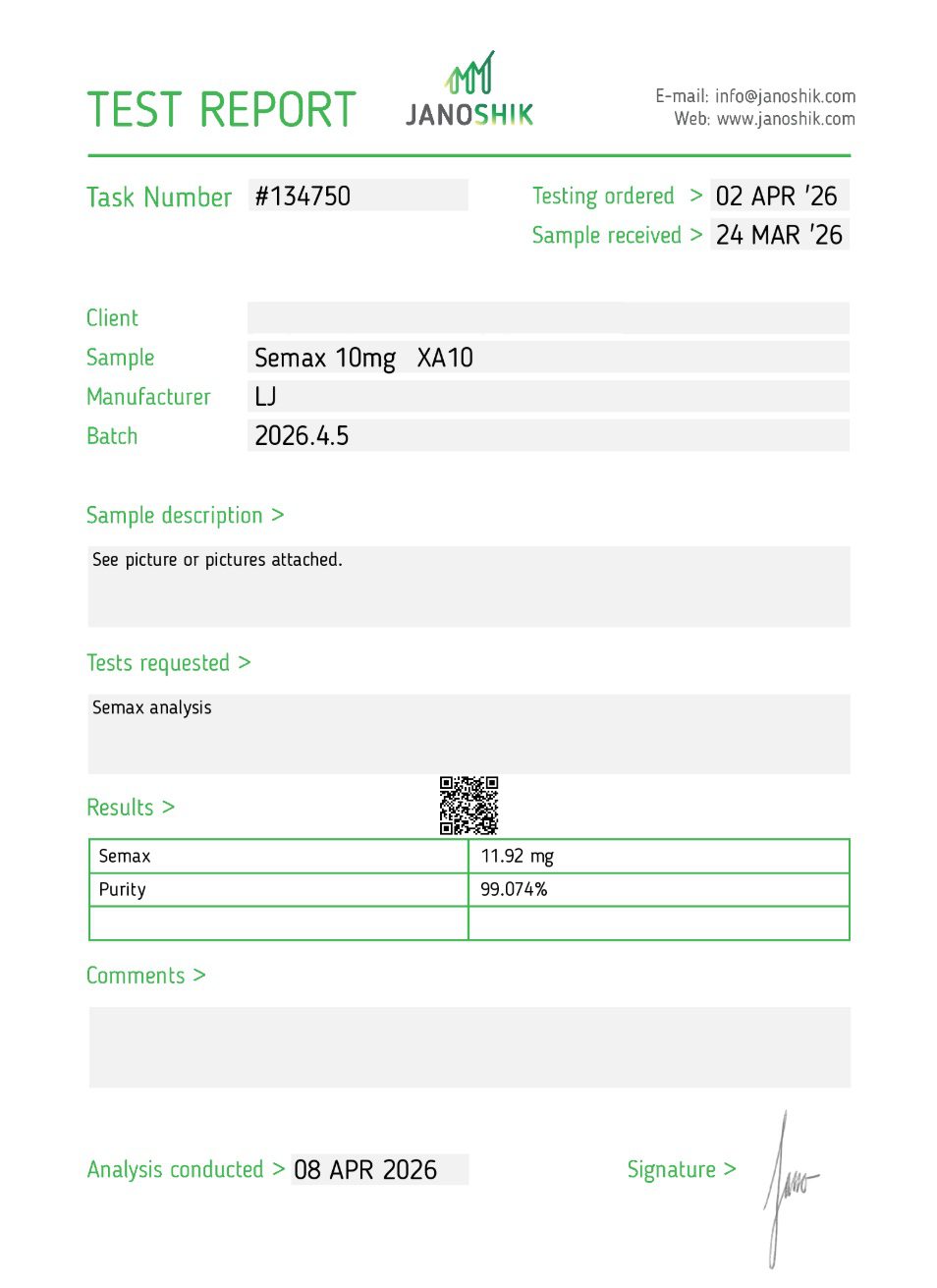
Semax (ACTH4-7-PGP, CAS 80714-61-0) is a synthetic heptapeptide with the sequence Met-Glu-His-Phe-Pro-Gly-Pro, developed as a structurally modified analog of the endogenous regulatory peptide ACTH(4-10) (Met-Glu-His-Phe-Arg-Trp-Gly) by the Institute of Molecular Genetics of the Russian Academy of Sciences, supplied by AusPepLabs in lyophilized format for laboratory and analytical research applications. Semax retains the ACTH(4-7) core sequence but replaces the C-terminal Arg-Trp-Gly with Pro-Gly-Pro to enhance metabolic stability, and is entirely devoid of adrenocorticotropic hormonal activity. It is studied as a research tool for investigating BDNF signaling, dopaminergic and serotonergic pathway modulation, neurotrophin expression, and neuroprotective mechanisms in controlled preclinical experimental systems. Each vial is independently verified to ≥99% HPLC purity with a Certificate of Analysis available on request. For scientific research use only.
Why Research Laboratories Select Semax-Semax is a unique research tool that combines ACTH(4-7) neurotropic core activity with a stability-enhancing Pro-Gly-Pro C-terminal modification – while being entirely free of the adrenocorticotropic hormonal activity associated with full-length ACTH. This separation of neurotropic activity from hormonal effects makes it a clean research tool for studying BDNF signaling, neurotrophin expression modulation, and dopaminergic/serotonergic pathway dynamics in controlled CNS research systems. Additionally Semax has been studied for its ability to form stable Cu²⁺ complexes – making it relevant for copper-mediated neurochemistry and amyloid aggregation research.
| Dosage | 10mg |
|---|
Unlock 25% OFF
Your First Order!
Reviews
There are no reviews yet.