
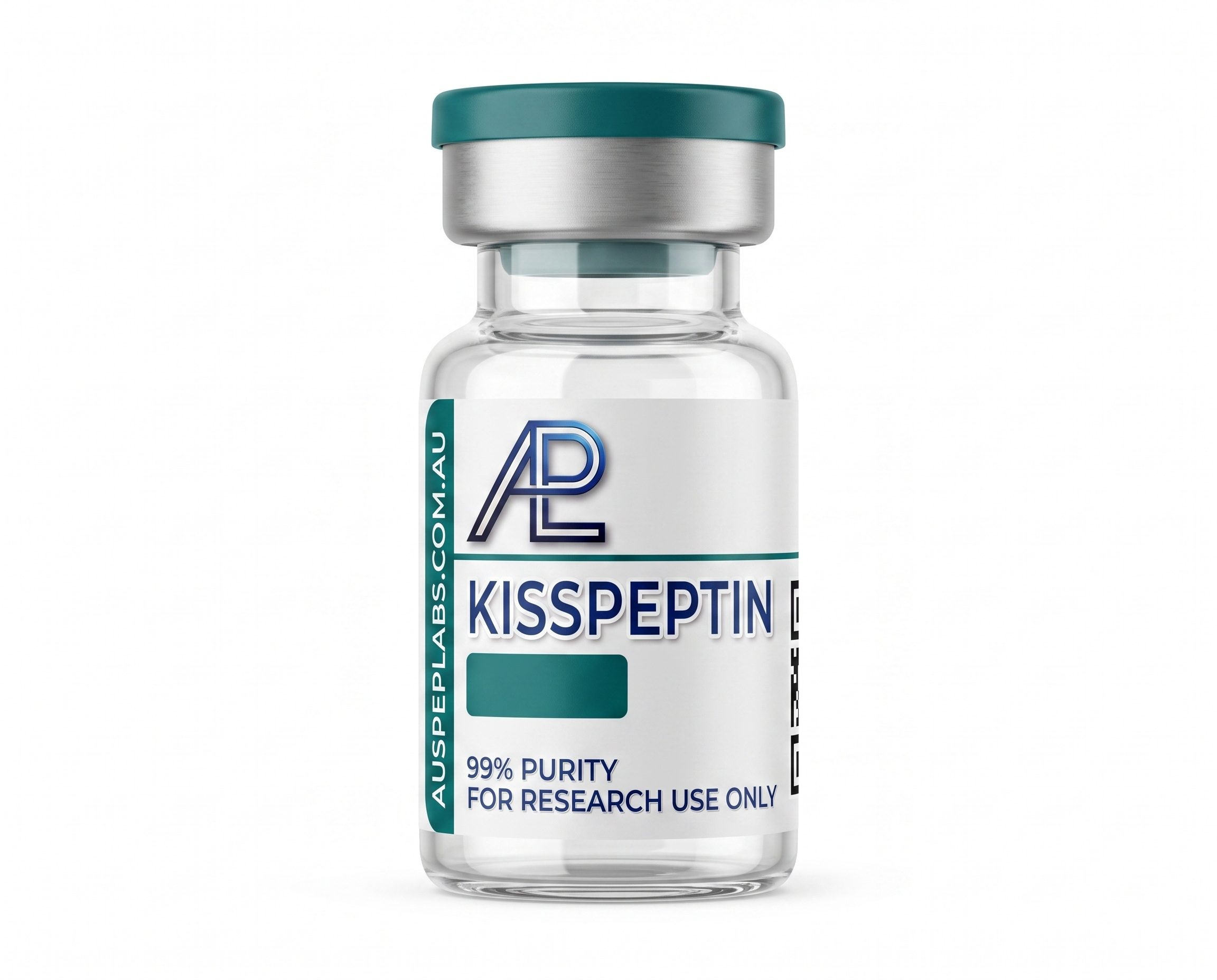
$60.00 – $90.00Price range: $60.00 through $90.00
⚠️ Important Notice:
By purchasing, you confirm that you are a qualified individual using this product in accordance with all applicable laws and research regulations.
Kisspeptin-10 (KP-10, CAS 374675-21-5) is a synthetic C-terminally amidated decapeptide representing the minimal active C-terminal sequence of the endogenous KISS1 gene product (kisspeptin-54/metastin), supplied by AusPepLabs for laboratory and analytical research applications. As the shortest kisspeptin fragment retaining full intrinsic agonist activity at the KISS1R receptor (GPR54), Kisspeptin-10 is one of the most widely used research tools in reproductive endocrinology, neuroendocrine signaling, and hypothalamic-pituitary-gonadal (HPG) axis biology. Each vial is independently verified to ≥99% HPLC purity with a Certificate of Analysis available on request. For scientific research use only.
Why Research Laboratories Select Kisspeptin-10
Kisspeptin-10 is the minimal active sequence of the kisspeptin family and the most widely used kisspeptin isoform in laboratory research. As a full agonist at KISS1R/GPR54 with potency comparable to kisspeptin-54, it enables precise investigation of GPR54-mediated signaling without the added complexity of longer kisspeptin variants. Its role as an upstream regulator of GnRH neuron activation makes it an essential reference compound for laboratories investigating HPG axis biology, reproductive neuroendocrinology, and gonadotropin secretion models.
| Dosage | 10mg, 5mg |
|---|
Unlock 25% OFF
Your First Order!
Reviews
There are no reviews yet.