
$170.00 Original price was: $170.00.$135.00Current price is: $135.00.
⚠️ Important Notice:
By purchasing, you confirm that you are a qualified individual using this product in accordance with all applicable laws and research regulations.
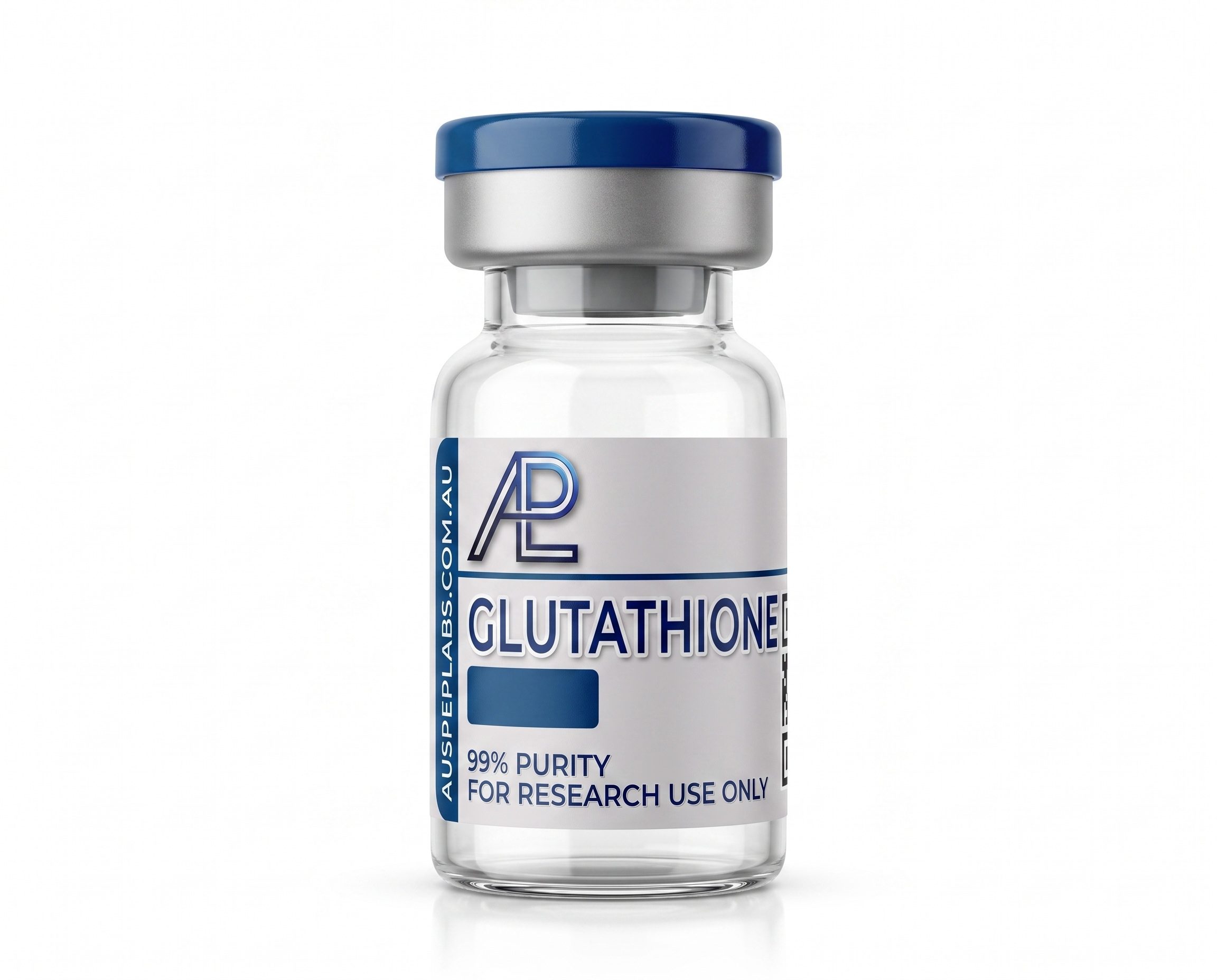
Glutathione GSH (CAS: 70-18-8) (L-Glutathione Reduced, γ-Glutamylcysteinylglycine, CAS 70-18-8) is an endogenous tripeptide composed of glutamic acid, cysteine, and glycine – the most abundant non-protein thiol found in virtually all living cells — supplied by AusPepLabs in lyophilized powder format for laboratory and analytical research applications. As the predominant intracellular antioxidant and a central mediator of cellular redox homeostasis, GSH is one of the most extensively studied compounds in cellular biology with thousands of published references across oxidative stress, detoxification, redox signaling, and protein biochemistry research. Each vial is independently verified to ≥99% HPLC purity with a Certificate of Analysis available on request. For scientific research use only.
Why Research Laboratories Select Glutathione GSH
Glutathione is the most abundant non-protein thiol in mammalian cells and one of the most fundamental reference compounds in cellular biology research. Its central role in maintaining cellular redox homeostasis — alternating between its reduced (GSH) and oxidized (GSSG) forms – makes it an essential tool for laboratories investigating oxidative stress models, reactive oxygen species (ROS) scavenging, thiol-dependent enzyme activity, glutathione S-transferase (GST) tag protein purification, and detoxification pathway biology.
| Dosage | 1500mg, 600mg |
|---|
Unlock 25% OFF
Your First Order!
Reviews
There are no reviews yet.