Description
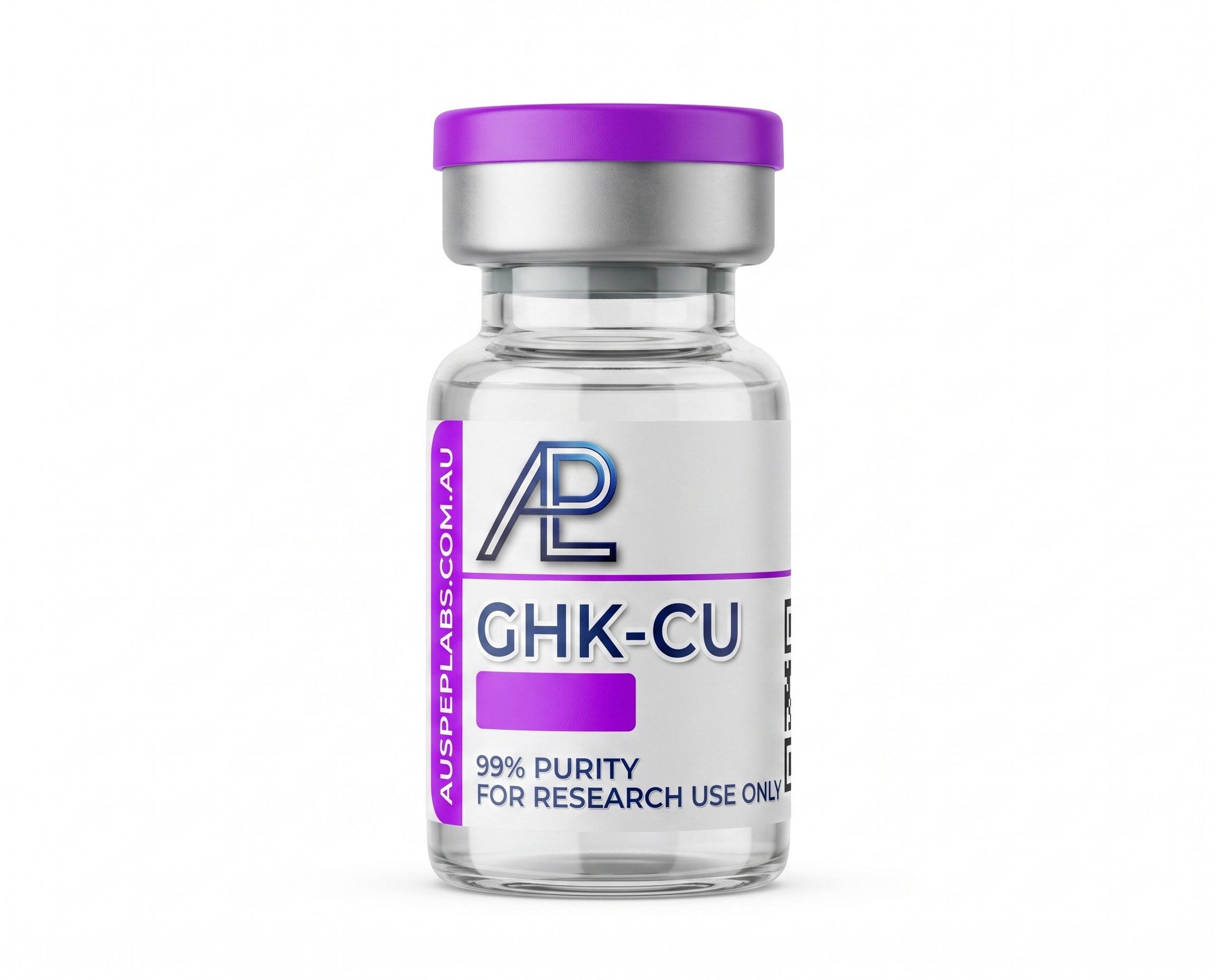
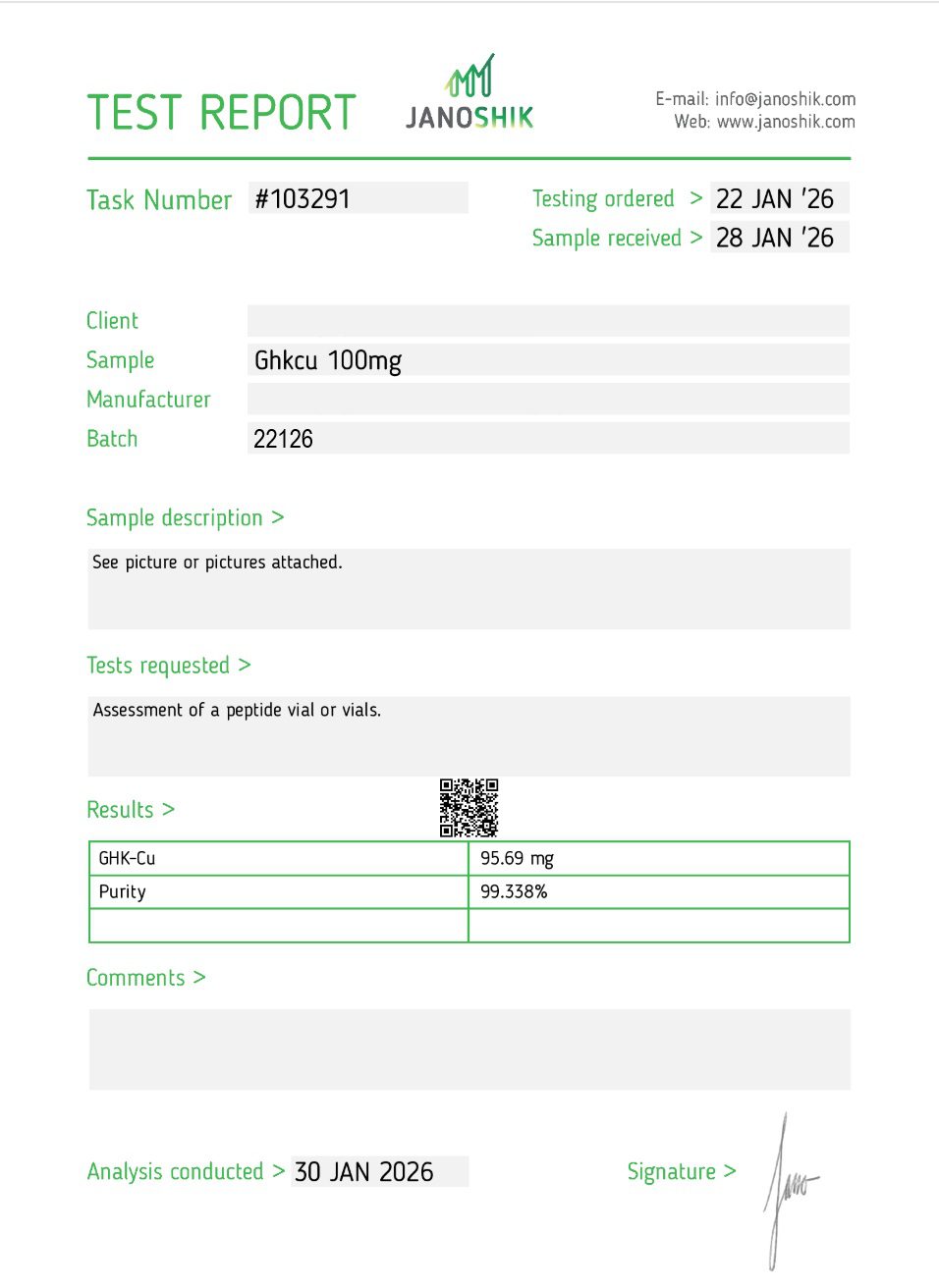
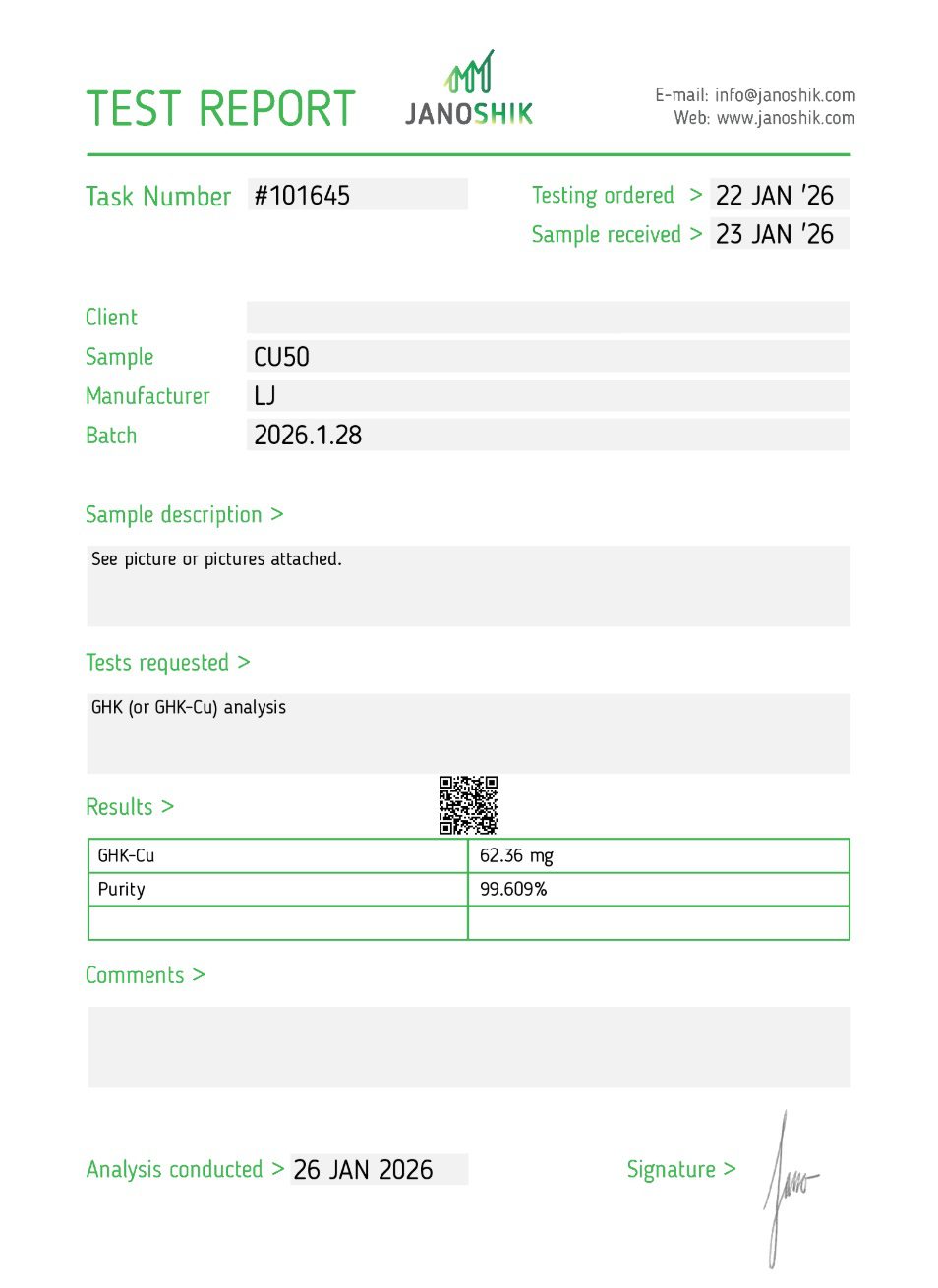
GHK-Cu (Glycyl-L-Histidyl-L-Lysine Copper, CAS 49557-75-7) is a naturally occurring copper-binding tripeptide first isolated from human plasma, supplied by AusPepLabs for laboratory and analytical research applications. Composed of glycine, histidine, and lysine complexed with copper(II), GHK-Cu is one of the most extensively studied copper-peptide complexes in cellular biology research. Each vial is independently verified to ≥99% HPLC purity with a Certificate of Analysis available on request. For scientific research use only.
Why Research Laboratories Select GHK-Cu
GHK-Cu is among the most studied copper-peptide complexes in current cellular and molecular biology research. First isolated from human plasma by Pickart et al. in the 1970s, its strong affinity for copper(II) and ability to influence gene expression across multiple cellular pathways has made it a widely referenced research tool for laboratories investigating extracellular matrix biology, copper-dependent signaling, and cellular stress response models.
- Naturally occurring copper-binding tripeptide – first isolated from human plasma by Loren Pickart, Ph.D. in 1973
- Strong Cu²⁺ affinity – coordinates copper(II) via the Gly-His-Lys amino acid sequence
- Studied in preclinical models examining extracellular matrix remodeling, fibroblast activity, and collagen-associated signaling
- Referenced in gene expression research involving over 4,000 human genes in laboratory settings
- Appears as distinctive blue-green powder due to copper(II) complexation – visually distinguishable from non-copper peptides
- Lyophilized format ensures stability and reproducibility across experimental runs

Reviews
There are no reviews yet.